
XPS Board Price Guide: What You'll Actually Pay in India (2025 Rates)
Categories
Recent Posts
XPS Board Price Guide: What You'll Actually Pay in India (2025 Rates)
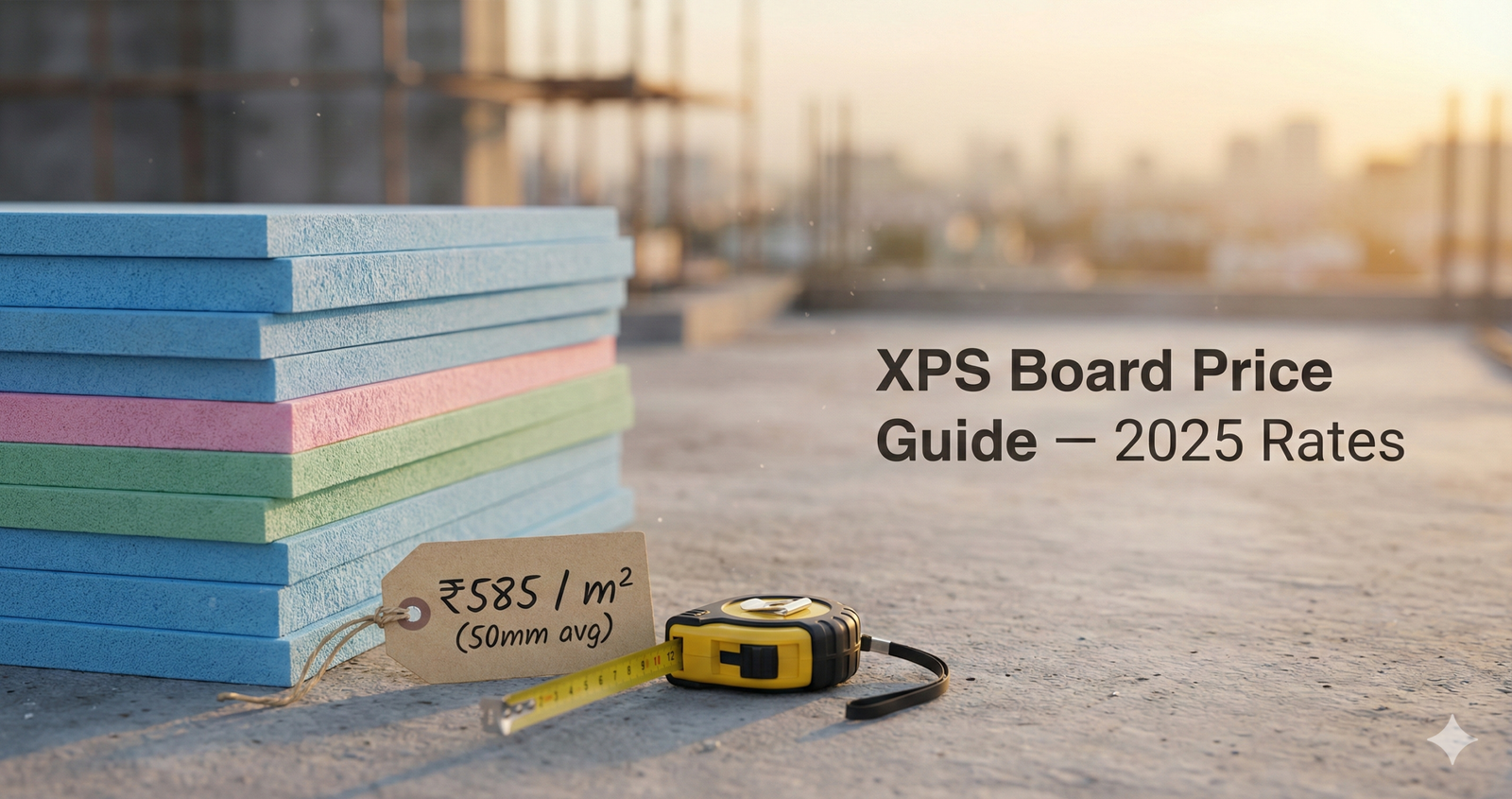
XPS board pricing can be confusing when you’re trying to budget for your insulation project. With thickness options ranging from 25mm to 75mm and varying technical specifications, finding the right product at the right price requires some research.
We’ve created this comprehensive guide to help you navigate XPS insulation options in the Indian market. Whether you’re looking for water-resistant XPS foam sheets or high-density insulation boards that can withstand temperatures up to 75 degrees Celsius, this article breaks down what you’ll actually pay in 2025.
In the following sections, we’ll explore different types of XPS board insulation, explain how specifications like density (typically 30-40 kg/m³) affect pricing, and show you how to effectively compare quotes from various suppliers. This guide specifically focuses on the Indian market, where manufacturers report annual turnovers between 5-25 crore rupees, indicating the significant size of this industry.
XPS Board Types and Their Price Range in 2025
In the Indian market, XPS board prices vary considerably based on type, thickness, and technical specifications. Here’s what you can expect to pay for different varieties in 2025.
XPS insulation board
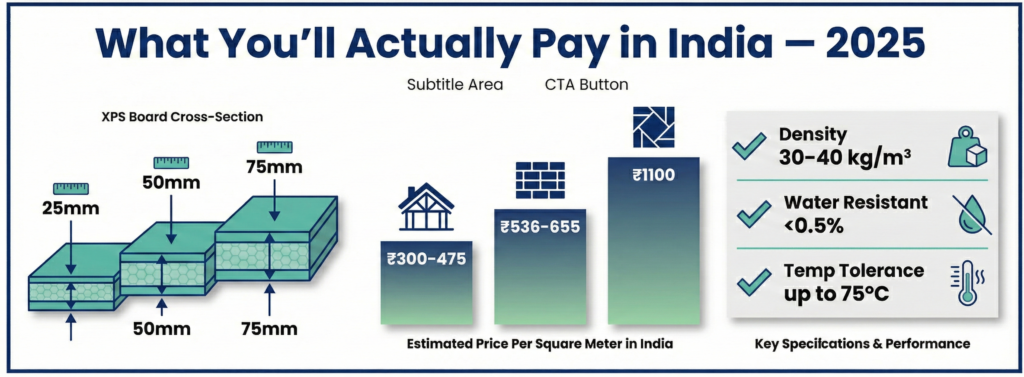
Standard XPS insulation boards typically range from ₹300 to ₹475 per square meter, making them a cost-effective option for many construction projects. These boards generally feature:
- Densities of 28-35 kg/m³
- Thicknesses from 25mm to 75mm
- Blue, pink, or green color options
- Standard dimensions of approximately 1250mm x 600mm
The closed-cell structure of these boards prevents water absorption while providing superior insulation performance. Moreover, their moisture-resistant properties make them ideal for areas prone to dampness, ensuring long-term durability and efficiency.
50mm XPS board
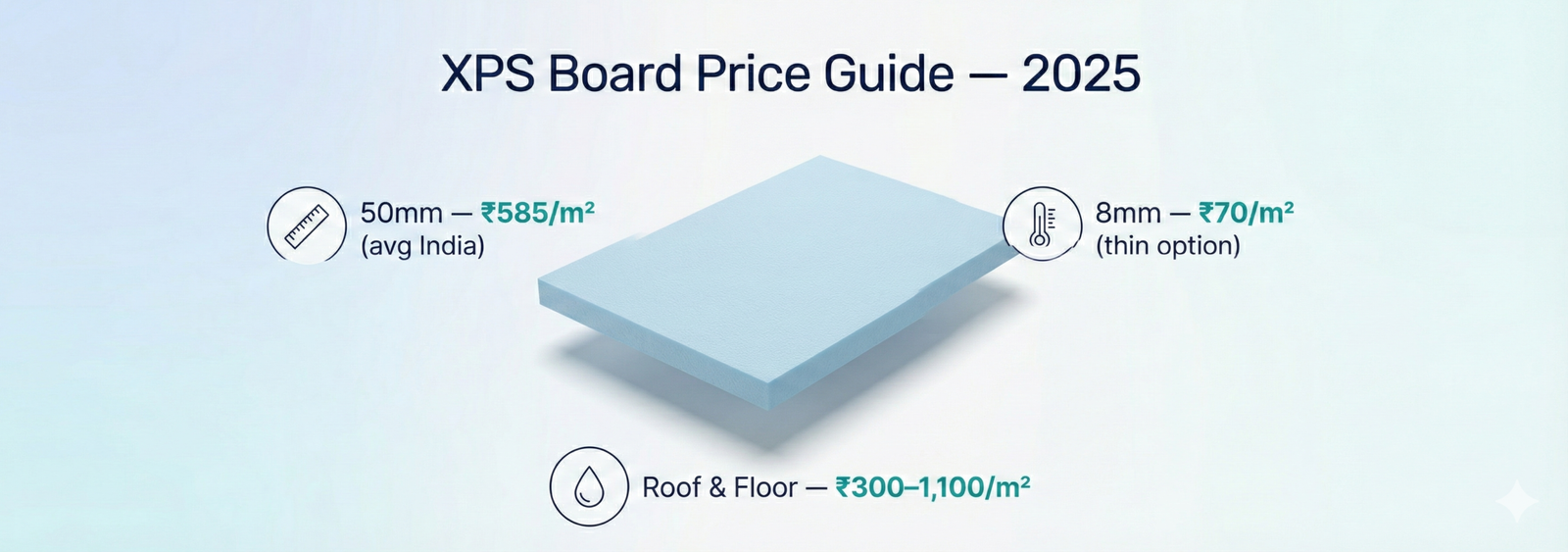
The 50mm XPS board represents one of the most popular thickness options due to its balance between insulation performance and cost. Currently, these boards are priced between ₹536 and ₹655 per square meter in Delhi, with nationwide average prices hovering around ₹585 per square meter.
These medium-thickness boards offer excellent thermal resistance with R-values typically in the 4.5-5.5 range per inch of thickness. Additionally, they can withstand temperatures between 60-100 degrees Celsius, making them suitable for varied climate conditions throughout India.
8mm thermal insulation board
For projects requiring thinner insulation solutions, 8mm thermal insulation boards provide an alternative option. These boards cost approximately ₹70 per square meter – significantly less than their thicker counterparts.
Despite their slimmer profile, these boards offer impressive specifications, including:
- 97% reflectivity and 3% emissivity ratings
- Maximum temperature resistance of 6-8 degrees Celsius
- R-Value of 3.10 M2 C/W
Unlike standard XPS boards, these thinner options often come in larger roll formats (typically 1.25m x 40m), making them particularly suitable for covering extensive areas such as industrial roofing or large-scale HVAC applications.
Ultimately, the price you’ll pay depends on your specific insulation requirements, with thicker boards offering greater insulation values but at correspondingly higher costs.
Key Specifications That Influence XPS Board Price
Several technical factors determine the final cost of XPS boards in the Indian market. Understanding these specifications helps you evaluate quotes accurately and select the right product for your requirements.
Thickness and size variations
The standard dimensions for most XPS boards are 1250mm × 600mm, though width can range from 600mm to 1200mm depending on the manufacturer. Thickness options typically span from 10mm to 200mm, with popular choices being 25mm, 50mm, and 75mm.
Thickness directly impacts pricing the same XPS board with identical specifications but different thickness will vary in cost per square meter. Nevertheless, most customers typically request boards between 35mm-85mm thick, which often results in more competitive pricing for these standard sizes.
Material density and strength
Density ranges for XPS boards generally fall between 26-100 kg/m³, with most standard products offering 30-35 kg/m³. Higher density boards cost substantially more but deliver greater durability.
Compressive strength, measured in kilopascals (kPa), ranges from 150 kPa to 1500 kPa. This specification directly correlates with density, boards with 250 kPa strength command higher prices than standard versions. Consequently, projects requiring load-bearing applications need higher investment in stronger boards.
Water resistance and temperature tolerance
XPS boards feature closed-cell structures that deliver water absorption rates below 0.5%, making them ideal for humid environments. This water-resistant property contributes to their premium pricing over other insulation options.
Temperature tolerance is another crucial factor. Quality XPS boards function effectively between -150°C and 70°C, with premium products withstanding up to 75°C. Boards designed for extreme temperature ranges typically cost more than standard variants.
Surface finish and edge type
Edge treatment options include butt edge, square edge, and rectangular configurations. Surface finishes range from plain to smooth, each affecting both installation method and price.
The combination of these specifications determines the final price you’ll pay. For optimal value, identify which specifications matter most for your specific application rather than overpaying for unnecessary features.
Where XPS Boards Are Used and Why It Affects Cost
The specific application of XPS boards directly influences their cost structure in the Indian market. Each usage scenario demands different specifications, thereby affecting pricing.
Roof insulation
XPS insulation, specifically engineered for inverted roofs, helps maintain steady temperature for roof membranes. This specialized application minimizes damage from freeze-thaw cycles and protects during construction. For standard roof insulation, prices start around ₹300 per square meter for 25mm thick boards.
Furthermore, the long service life of up to 50 years makes XPS foam a cost-effective solution for roof applications. The closed-cell structure provides superior thermal efficiency, essentially eliminating air voids between cells.
Wall and floor insulation
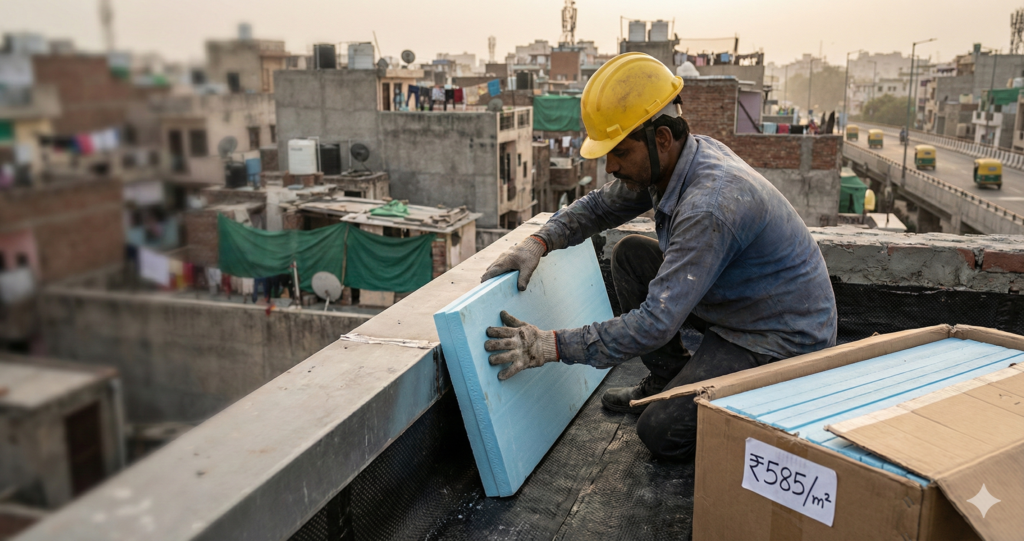
Wall applications primarily utilize 50mm XPS boards priced at approximately ₹585 per square meter. For external wall insulation with higher thickness (100mm), prices increase to around ₹1,100 per square meter.
Floor insulation, notably utilizing 50mm thick boards, costs about ₹585 per square meter with standard dimensions of 600mm x 1250mm. The moisture resistance makes XPS boards ideal for below-grade applications like foundations and basements.
HVAC and duct applications
Thermal insulation boards for HVAC systems typically cost ₹450 per square meter. These specialized applications require:
- Temperature tolerance up to 180°C
- Aluminum foil backing for enhanced performance
- Moisture-resistant properties to prevent condensation issues
In contrast to wall or roof applications, HVAC installations often use thinner boards with specialized surface treatments. The versatility of XPS boards across these different applications contributes to their widespread use in Indian construction projects, with prices varying accordingly based on the specific performance requirements.
How to Compare XPS Board Prices from Different Sellers
Comparing prices among XPS insulation board suppliers requires methodical evaluation beyond looking at the rupee figure alone. Let me share practical strategies to ensure you get the best value when shopping for these materials.
Understanding price per square meter
Always calculate the price per square meter rather than the bundle price. The base ex-works price (material cost) represents the core expense before additional charges. For accurate comparison, use this formula: Total Installed Cost = (Board Price × Total Area) + Delivery Fees + Adhesives/Fasteners + Waste Factor. Currently, standard XPS boards range from ₹536 to ₹655 per square meter in Delhi.
Checking for bundled packaging
Examine how suppliers package their products, standard bundles typically contain 8 pieces. Bulk purchasing almost always yields better pricing than multiple smaller orders. Common bundle dimensions include 1250mm × 600mm formats with varying thicknesses. Ultimately, coordinating purchases to hit volume thresholds can significantly reduce your per-unit costs.
Evaluating brand and quality differences
Brand differences substantially impact pricing premium brands like Supreme Insuboard command ₹300-900 per square meter whereas local alternatives might cost less. Verify technical specifications match exactly when comparing quotes. Remember, affordable doesn’t mean cheap—it means best value for required performance. Examining supplier ratings (ranging from 3.5-5 stars) can provide insight into reliability.
Requesting updated 2025 quotes
Since XPS board prices fluctuate based on thickness, brand, and region, collect multiple quotations. Suppliers with local inventory often offer better pricing on smaller requirements. Always request current 2025 rates as prices regularly update, December 2025 quotes show variations even within the same city.
Conclusion
Navigating the XPS board market requires careful consideration of multiple factors before making a purchase decision. Throughout this guide, we’ve seen how prices range significantly based on thickness, density, and specific applications. Standard boards typically cost between ₹300-475 per square meter, while specialized varieties command higher prices depending on their technical specifications.
Thickness stands out as a primary price determinant, with 50mm boards averaging around ₹585 per square meter across India. Additionally, material density directly affects both durability and cost, higher density boards offer greater strength but at premium prices. Water resistance capabilities and temperature tolerance likewise contribute to the overall value proposition of different XPS products.
Application requirements certainly influence which board specifications you should prioritize. Roof insulation demands different properties than wall insulation or HVAC applications, therefore affecting what you’ll ultimately pay. Understanding these differences helps prevent overspending on unnecessary features while ensuring you get adequate performance for your specific needs.
When comparing quotes from various suppliers, remember to calculate price per square meter rather than bundle prices. Furthermore, consider bulk purchasing opportunities and evaluate brand differences carefully. Most importantly, request updated 2025 quotes since prices fluctuate regularly based on market conditions.
Armed with this comprehensive pricing information, you can now make informed decisions about your insulation project. The right XPS board at the right price balances your budget constraints with performance requirements. Your investment in proper insulation will ultimately pay dividends through improved energy efficiency and building durability for years to come.