
Sinicon Sand in Construction: What Expert Builders Won't Tell You
Categories
Recent Posts
Sinicon Sand in Construction: What Expert Builders Won't Tell You
Did you know that high-quality silica sand must contain at least 95% silicon dioxide and no more than 0.6% iron oxide to be distinguished from regular sand? Sinicon Sand, a specialized construction material, offers similar impressive specifications that many builders don’t openly discuss with their clients.
In our years of construction experience, we’ve discovered that understanding sinicon sand applications can significantly improve project outcomes. Whether you’re wondering how to use sinicon sand effectively, integrating sinicon sand in concrete for better strength, or achieving smoother sinicon sand plastering, this guide covers everything you need to know. Furthermore, we’ll explore the remarkable properties that make this material invaluable – from its high melting point to its exceptional durability in building products.
Throughout this article, we’ll share insider knowledge about Sinicon Sand that can transform your construction projects, revealing why experienced builders consider it their secret advantage in creating structures that stand the test of time.
Understanding Sinicon Sand: Composition and Origins
The unique composition of Sinicon Sand sets it apart from conventional construction materials. Unlike ordinary sand, this specialized material boasts extraordinary properties that make it invaluable for builders seeking superior performance.
What is Sinicon Sand made of?
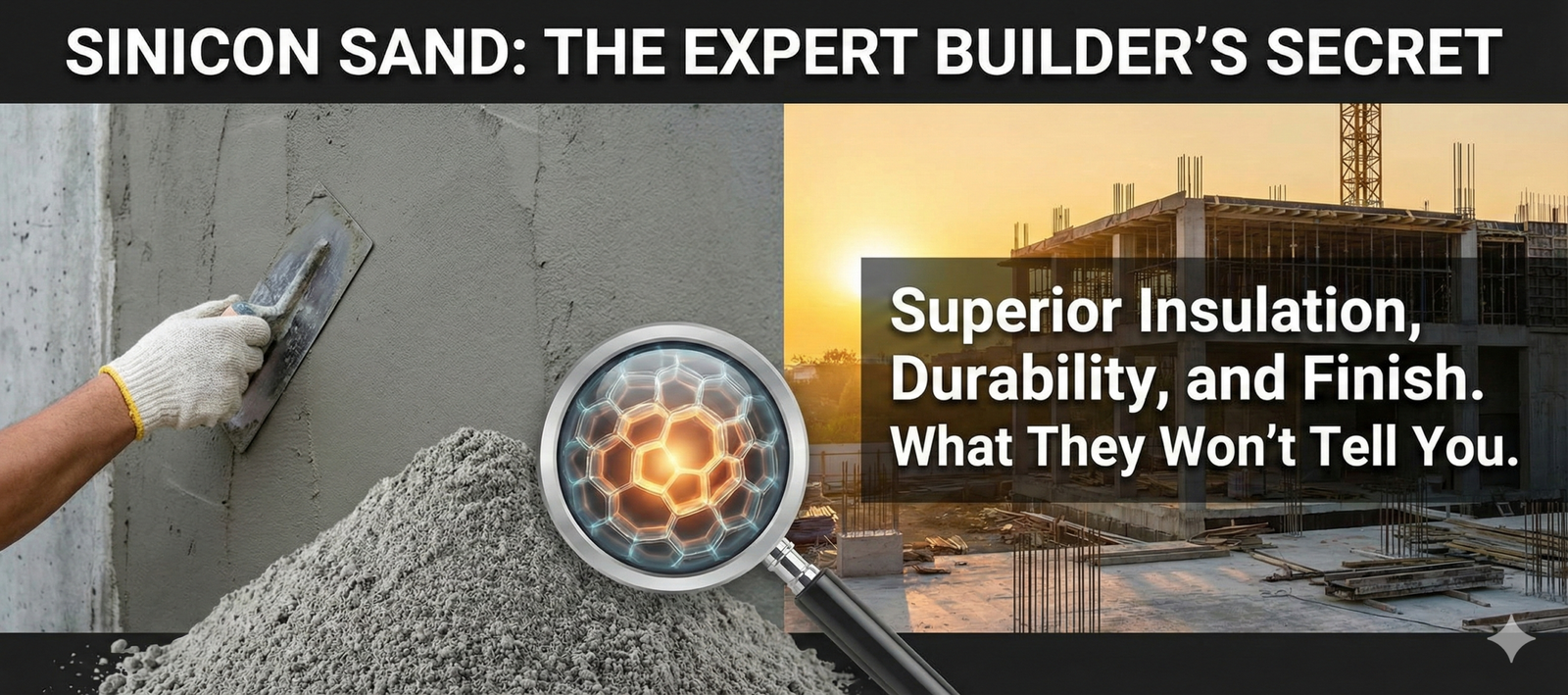
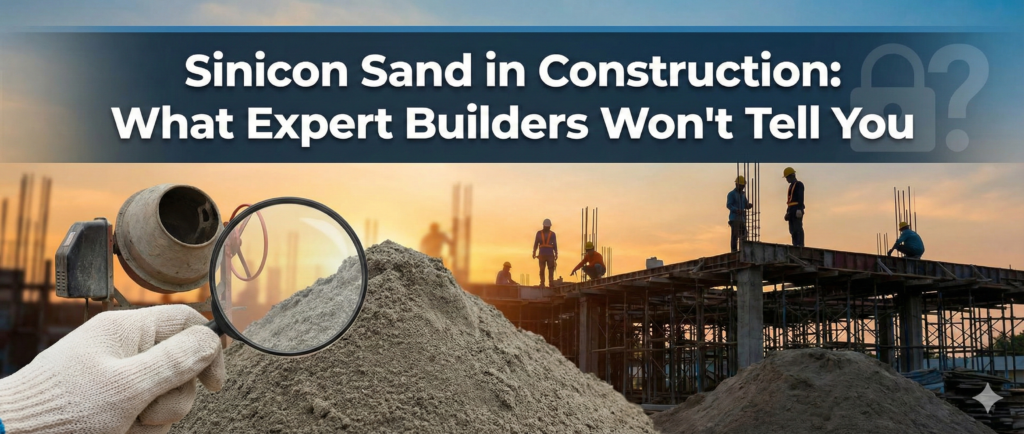
Sinicon Sand is primarily composed of a rare volcanic glass found exclusively in one location on Earth. Under a microscope, each particle reveals a remarkable structure – a froth of glass-walled closed cells, each containing a near vacuum. Essentially, these particles function like millions of tiny sealed “thermos flasks,” which explains their exceptional insulating and fireproofing capabilities. The volcanic glass ore undergoes a patented manufacturing process that transforms it into well-sealed, tough glass granules ideally suited for use with cementitious and other binders.
How it compares to silica and river sand
In contrast to Sinicon Sand, silica sand consists of over 95% silicon dioxide (SiO2) with minimal impurities. While silica sand features angular, uniform grains that enhance load-bearing capacity, river sand offers rounded, smooth particles that improve workability.
The differences become more apparent when examining their properties:
- Composition: Sinicon Sand contains volcanic glass; silica sand is primarily SiO2; river sand includes various minerals like feldspar and mica
- Durability: Sinicon Sand offers exceptional resistance to weathering and erosion
- Thermal Properties: Sinicon Sand provides superior heat proofing, whereas conventional sands lack this attribute
Where it is sourced and processed
Notably, Sinicon Sand originates from a unique deposit located exclusively in South Africa[32][33]. This rarity contributes to its special properties. The production process involves several key steps: first, the volcanic glass ore is crushed, then processed through specialized equipment. This patented process converts the crushed grains into well-sealed glass beads while simultaneously altering the chemistry of the glass, resulting in a higher melting point. The final product has a pH value between 9-13 and typically appears gray in color[51].
The exclusive source and specialized processing explain why Sinicon Sand delivers performance benefits that ordinary construction sands simply cannot match.
Performance Benefits in Real Construction Scenarios
When tested in actual construction projects, Sinicon Sand demonstrates exceptional performance that surpasses conventional aggregates. I’ve found its unique properties deliver measurable benefits across multiple applications that transform ordinary structures into durable, efficient buildings.
Improved bonding in concrete
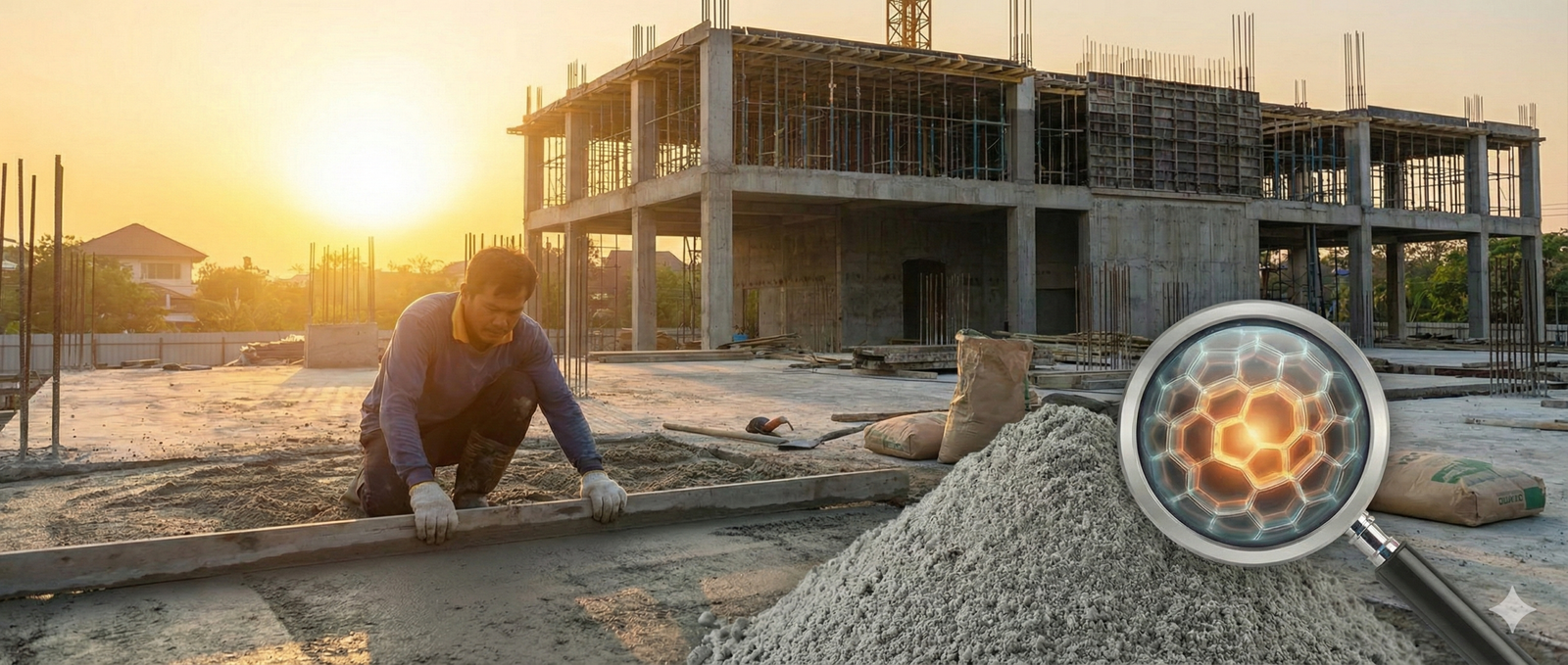
Sinicon Sand creates remarkably strong bonds in concrete applications. During mixing, its well-sealed tough structure prevents severe granule damage, facilitating proper curing of the cement. This results in concrete that exhibits surprising strength compared to other lightweight options. In fact, practical strengths up to 23MPa can be easily achieved, making it suitable for structural applications requiring both durability and insulation properties.
Additionally, Sinicon Sand concrete doesn’t rely on air-entrainment and can be cured under any conditions of vibration. This makes it particularly valuable for projects with challenging curing environments or when working with specialized concrete formulations.
Enhanced finish in plastering
For plastering applications, Sinicon Sand offers superior adhesion to most common surfaces without requiring additives. The material’s unique microscopic structure comprising millions of tiny sealed “thermos flasks”, creates a finish that’s both esthetically pleasing and functionally superior.
Moreover, when used as a plaster aggregate, Sinicon Sand provides exceptional climate control properties. Case studies demonstrate that a 20mm thick Sinicon Sand plaster on building roofs creates interiors that remain cooler during summer and warmer during winter. This dual-season benefit extends building longevity while improving occupant comfort.
Resistance to weathering and erosion
Perhaps most impressive is Sinicon Sand’s exceptional resistance to environmental degradation. When mixed with cement in the correct proportion, it creates a completely watertight finish without requiring additives. This waterproof quality substantially reduces substrate corrosion and extends the life of structures.
The material’s resistance to weathering comes from its specialized structure that limits water penetration. Unlike conventional sand-based concrete that may deteriorate under repeated freeze-thaw cycles or prolonged moisture exposure, Sinicon Sand maintains its integrity even in challenging environmental conditions. Its inorganic structure also ensures zero smoke and zero fumes under fire conditions, adding safety benefits to its durability advantages.
6 Practical Ways to Use Sinicon Sand on Site
Now that you understand what Sinicon Sand is, let’s explore the practical applications that make this material truly valuable on construction sites. Based on my experience with this volcanic glass-derived aggregate, here are six proven ways to use Sinicon Sand effectively.
1. Mixing Sinicon sand in concrete
Sinicon Sand creates exceptionally strong concrete despite its lightweight nature. Mix at a 3:1 ratio (Sinicon Sand:Cement) by volume for standard applications. Consequently, the well-sealed tough structure prevents granule damage during mixing while enabling proper cement curing. This unique composition allows concrete to reach impressive strengths up to 23MPa without relying on air-entrainment, and it can be cured under any vibration conditions.
2. Using Sinicon sand for plastering
For internal and external plastering, apply a 12mm thick single coat with Sinicon Sand and cement at a 3:1 ratio. Generally, one Jumbo Bag yields approximately 85 sq.ft of plaster at this thickness. The plastering process requires standard surface preparation: clean with wire brush, hack smooth surfaces, wet and cement-grout surfaces, then cure for 14 days.
3. Application in tile bedding and jointing
Sinicon Sand works exceptionally well for tile bedding applications, primarily due to its thermal insulation properties and compatibility with Portland cement. For built-up floors, use a mix ratio between 3:1 and 4.5:1 (Sinicon Sand:Cement) to create a stable, insulating base that enhances overall floor performance.
4. Use in ready-mix concrete plants
In ready-mix applications, Sinicon Sand’s lightweight properties make it ideal for creating specialized concrete mixtures. Surprisingly, approximately 11 bags of Sinicon Sand are required for each cubic meter of concrete to be mixed. The material’s resistance to granule damage ensures consistent quality even through mechanical mixing processes.
5. Sinicon sand in decorative finishes
For architectural applications, Sinicon Sand offers both esthetic and functional benefits. Its gray color and uniform texture make it suitable for decorative finishes, albeit requiring proper preparation. The material’s fire resistance (withstanding temperatures up to 1250°C) makes it particularly valuable for both interior and exterior decorative elements that must meet safety standards.
6. Use in structural repair compounds
When repairing structural elements, Sinicon Sand mixed with cement at a 1:3 ratio creates a robust compound that’s especially valuable for heat and fire resistance. Correspondingly, the material shows no de-bonding when applied over carbon fiber reinforced polymer (CFRP) wrapped surfaces, making it ideal for reinforcing structures while providing additional protection.
Insider Tips from Builders Who Use It Daily
Professional builders who use Sinicon Sand daily have accumulated valuable insights that can save you time, money, and materials. Let me share some of these practical tips that aren’t typically found in product manuals.
How to choose the right grade of Sinicon Sand
Selecting the appropriate mix ratio is crucial for your specific application. For external plastering or roof screed, use a 3:1 ratio (1 bag Sinicon Sand to 1 bag Ordinary Portland Cement). Internal plastering and built-up floors work best with either 3:1 or 4.5:1 ratios. First and foremost, consider your project’s insulation needs, for insulating roof decks, a 6:1 ratio provides optimal thermal properties, whereas fire seals can use ratios from 3:1 up to 10:1.
Storage and handling best practices
Always store Sinicon Sand in containers of adequate strength. Since it has a well-sealed tough structure that prevents severe granule damage during mixing, proper storage maintains this integrity. Initially, keep bags in dry conditions to avoid unnecessary moisture absorption before mixing.
Why Sinicon Sand reduces material wastage
Sinicon Sand mixed with cement in correct proportions creates a completely watertight finish without requiring additives. This inherent waterproofing substantially reduces substrate corrosion. Subsequently, you’ll need fewer repair materials over time.
Hidden cost savings over time
Beyond immediate benefits, Sinicon Sand delivers long-term savings through its thermal properties. A case study of a 10,000 sq.ft building in New Delhi revealed significant reductions in both capital and operating expenses. Additionally, its climate control properties keep interiors cool during summer and warm during winter, reducing energy costs year-round.
Conclusion
Sinicon Sand stands out as a truly remarkable construction material that outperforms traditional aggregates in numerous ways. Throughout my years in construction, I’ve witnessed firsthand how this specialized volcanic glass-derived material transforms ordinary projects into exceptional structures. Its unique composition of millions of tiny sealed “thermos flasks” delivers unmatched thermal insulation, fire resistance, and durability.
Despite its lightweight nature, Sinicon Sand creates surprisingly strong concrete that reaches impressive strengths up to 23MPa. Additionally, its exceptional waterproofing properties eliminate the need for additives while providing substantial protection against substrate corrosion.
The versatility of this material truly shines when examining its applications. From concrete mixing and plastering to tile bedding and structural repairs, Sinicon Sand proves its value across numerous construction scenarios. Most importantly, the thermal benefits translate to tangible cost savings, keeping buildings cooler in summer and warmer in winter while reducing energy expenses year-round.
Though sourced exclusively from South Africa, the investment in Sinicon Sand pays dividends through reduced material wastage, enhanced structural integrity, and extended building lifespans. Consequently, builders who understand its proper application gain a significant competitive advantage.
Whether you’re tackling a small renovation or managing large-scale construction, this specialized sand deserves consideration for your next project. The superior performance, sustainability benefits, and long-term savings make Sinicon Sand not just another construction material – but rather a strategic choice for forward-thinking builders who prioritize quality and durability above all else.
Frequently Asked Questions
Q1. What makes Sinicon Sand unique in construction?
Sinicon Sand is composed of rare volcanic glass with a microscopic structure of glass-walled closed cells, providing exceptional insulating and fireproofing capabilities. It offers improved bonding in concrete, enhanced plastering finish, and superior resistance to weathering and erosion.
Q2. How does Sinicon Sand compare to traditional construction sand?
Unlike traditional sand, Sinicon Sand creates stronger bonds in concrete, offers better adhesion in plastering without additives, and provides superior climate control properties. It also demonstrates exceptional resistance to environmental degradation and maintains integrity in challenging conditions.
Q3. What are the main applications of Sinicon Sand in construction?
Sinicon Sand is versatile and can be used for concrete mixing, plastering, tile bedding, ready-mix concrete production, decorative finishes, and structural repair compounds. It’s particularly valuable for projects requiring both durability and insulation properties.
Q4. How does Sinicon Sand contribute to energy efficiency in buildings?
Sinicon Sand’s unique thermal properties help keep interiors cooler in summer and warmer in winter. A 20mm thick Sinicon Sand plaster on building roofs can significantly improve climate control, leading to reduced energy costs and improved occupant comfort year-round.
Q5. What are the long-term benefits of using Sinicon Sand in construction?
Using Sinicon Sand can lead to reduced material wastage, enhanced structural integrity, and extended building lifespans. Its waterproof quality substantially reduces substrate corrosion, and its thermal properties translate to tangible cost savings over time, making it a strategic choice for quality-focused builders.